
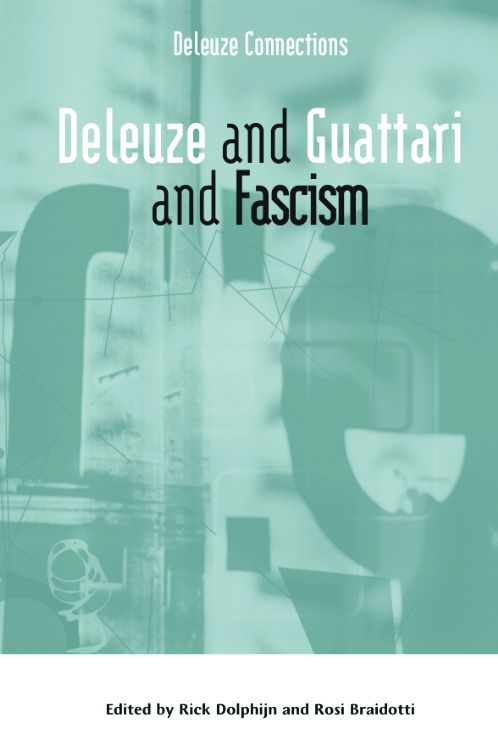
Edited by Rick Dolphijn, Rosi Braidotti
The first volume to place Deleuze and Guattari’s philosophy in the context of contemporary fascism
- Brings Deleuze to contemporary fascism, as opposed to earlier publications on Deleuze which dealt with historical fascism
- Uses case studies that are grounded in space and time, within contemporary Spain, Italy and Greece
- Presents fascism as more than just a political theory
- Addressing patriarchal fascism demonstrates that fascism is sexualized and genderized, which is highly relevant in the age of #metoo, Black Lives Matter and rising populism
- Critiques patriarchal fascism in an affirmative manner, offering insights for intervention and searching for new openings
A range of international contributors uncover and reflect upon the anti- and non-fascist ethics situated in Deleuze and Guattari’s philosophical framework and that of the scholarship that followed after. The ‘new philosophy’ that Deleuze and Guattari propose to us is engaged and situated and it asks us to map urgent issues, not by opposing ourselves to it, but by mapping how it is part of the everyday, and of ourselves. The global rise of fascism today demands a rigid and careful analysis. The concepts and themes that Deleuze (and Guattari) handed to us in their extensive oeuvre can be of immense help in capturing its micropolitics and macropolitics.
All of the contributions in this volume have a keen eye on the practices of fascism today, meaning that they all show us, very much in line with Deleuze’s thinking, how fascism works. The book is organized in three parts. The first part (21st century fascisms) focuses on the global threats technologies and algorithmic realities; the second part (situated fascisms) holds analyses of fascisms at work in different parts of the contemporary world; the third part deals with patriarchal fascism and offers concrete case-studies of sexualized and genderized modes of oppression.
Contents
Introduction: How To Live The Anti-Fascist Life And Endure The Pain?
Part I: 21st Century Fascisms
1. Human Nature And Anti-Fascist Living
2. Immanence, Neoliberalism, Microfascism: Will We Die In Silence?
3. Generative Contaminations: Biohacking As A Method For Instituting An Affirmative Politics Of Life
4. Algorithmic Governmentality And Managerial Fascism: The Case Of Smart Cities
5. The Two Cartographies: A Posthumanist Approach To Geomatics Education
6. The Theatre Of Everyday Debt-Cruelty: The Enfleshed Threat, Missing People And The Unbearable Strange Terrorist Machine
7. Giving Grace: Human Exceptionalism As Fascism
Part II: Situated Fascisms
8. Colonial Fascism: Redemption, Forgiveness And Excolonialism
9. Escaping Pro-Life Neo-Fascism In Italy: Affirmative And Collective Lines Of Flight
10. Nomadism Reterritorialized: The Lesson Of Fascism Debates In Korea
11. Cancerous Silence And Fascism. The Spanish Politics Of Forgetting
12. The Wounds Of Europe: The Life Of Joë Bousquet
13. Fascistophilic Epidemics: Transpositions On Shiite Medico-Religious Imagination
14. An Athens Yet To Come
Part III: Patriarchal Fascism
15. Fascism And The Entangled Subject, Or How To Resist Fascist Toxicity
16. Reclaiming Vital Materialism’s Affirmative, Anti-Fascist Powers. A Deleuzoguattarian-New Materialist Exploration Of The Fascist-Within
17. ‘Soy Boy’, Ecology, And The Fascist Imaginary
18. Pussy Riot Vs. Trump: Becoming Woman To Resist Becoming Fascist

 Psychoanalysis and Social Justice
Leave a comment