

Carolyn Laubender
Carolyn Laubender with the epilogue from her new book, ‘The Political Clinic: Psychoanalysis and Social Change in the 20th Century’.
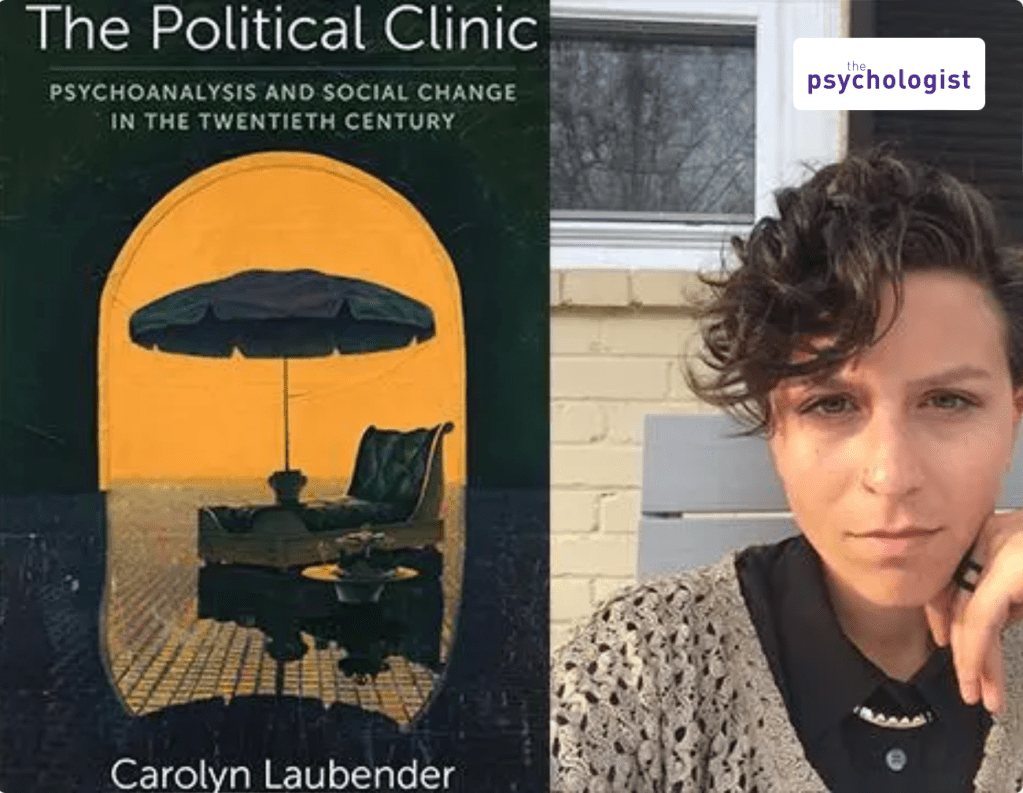
One way to understand the value of these clinical projects – beyond their potential for on-the-ground help to individual people and communities – is that they explicitly reject the spurious separation between practice and politics that has long haunted the Anglophone psychoanalytic tradition, especially. As I detail throughout this book, even clinical techniques that deny the political and position themselves as the height of orthodoxy (Kleinian reparation, Winnicottian good enough mothering, Bowlbian emotional security, etc.) take on necessarily political work – however much disavowal may mask and mystify that function. Ironically, psychoanalysis itself is perhaps the best cartographer of the dangers of disavowal since, through the perverse operation of simultaneous knowledge and denial, disavowal has an unparalleled power to bind potential transformation to conscious recognition, refusing change on the basis that knowledge is already both known and unknown and therefore not available for conscious assimilation. Ignorance is not a passive but an active epistemological stance. In the clinic, this can mean that the reputedly “apolitical” does its dirtiest – and most effective – work shoring up contingent and contestable values through the malleable practice of analytic interpretation.


 Psychoanalysis and Social Justice
Leave a comment